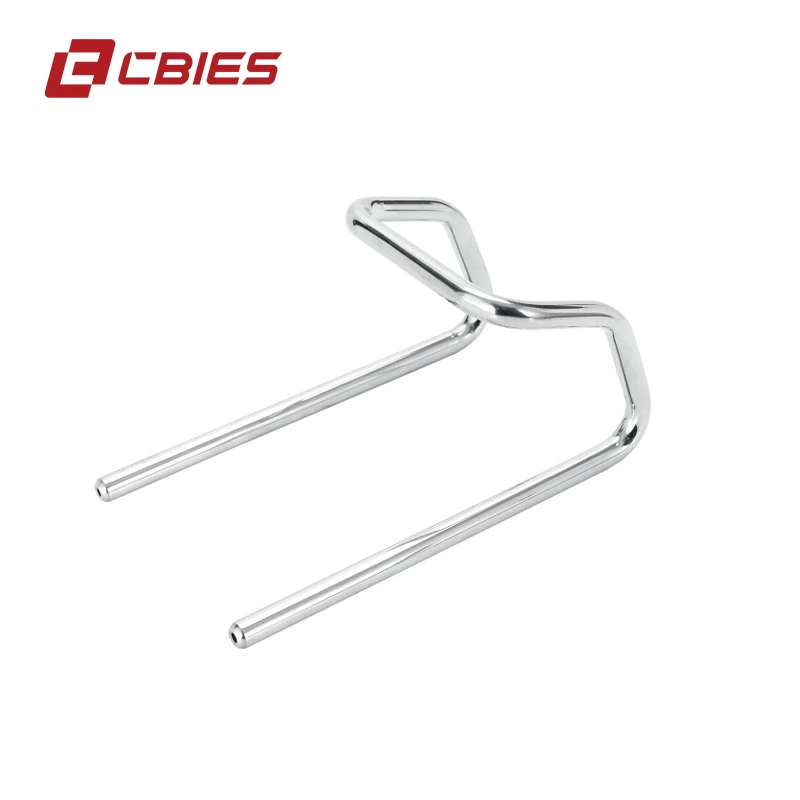


Handlebars for a motorcycle—often referred to as handlebars on motorcycle or simply handlebar of motorcycle—are the primary interface between rider and machine, dictating steering precision, stability, and comfort. A well-designed handlebar of motorcycle translates rider inputs into smooth, responsive control, while a poorly engineered one can lead to fatigue, instability, or even accidents. CBIES, a leading Chinese precision tube manufacturer with 20 years of expertise, plays a critical role in crafting high-performance handlebars for a motorcycle by supplying precision steel tubes—key components in handlebar construction. With an 85,000-ton annual production capacity, 4,000-strong technical team, $10 million annual export volume, and reach across North America, the EU, and Southeast Asia, CBIES delivers durable, dimensionally accurate tubes that form the backbone of reliable handlebars on motorcycle. For wholesalers serving motorcycle manufacturers and aftermarket suppliers, partnering with CBIES means accessing the foundational precision 管材 (tubes) needed to produce handlebars for a motorcycle that excel in control, safety, and longevity—backed by decades of engineering excellence.
|
Handlebar Type |
Key Design Features (Using CBIES Precision Tubes) |
Control Characteristics |
Ideal Motorcycle Types for Handlebars on Motorcycle |
Market Regions Served |
|
Cruiser Handlebars for a Motorcycle |
Upright design (70–80° angle); Width: 700–800mm; Material: CBIES seamless steel tube (18–22mm OD) |
High straight-line stability; comfortable upright riding posture; low fatigue for long rides |
Cruisers, touring motorcycles (long-distance travel) |
North America, EU (cruiser/touring motorcycle popularity), Southeast Asia (leisure riding) |
|
Sport Handlebar of Motorcycle |
Low-slung, narrow design (10–20° angle); Width: 600–650mm; Material: CBIES high-strength steel tube (20–24mm OD) |
Quick, responsive steering; aerodynamic posture; precise cornering control |
Sport bikes, racing motorcycles (high-speed, tight curves) |
EU, North America (sport bike markets), Central Asia (motorcycle racing communities) |
|
Dual-Sport Handlebars on Motorcycle |
Medium height (45–55° angle); Width: 750–850mm; Material: CBIES durable steel tube (19–23mm OD) |
Balanced on-road stability + off-road maneuverability; vibration dampening for rough terrain |
Dual-sport motorcycles (on-road/off-road use) |
Southeast Asia (off-road trails), Central America (mixed terrain riding), North America |
Yes—handlebars on motorcycle made with CBIES’ dual-sport steel tubes are built for off-road durability. The tubes feature a thickened wall (2.5–3mm) and high tensile strength (≥500 MPa), enabling them to withstand impacts from rough terrain (e.g., rocks, bumps) without bending or cracking. A Southeast Asian wholesaler supplied handlebars on motorcycle with CBIES’ tubes to off-road riders, who reported zero handlebar failures after 1,000+ km of trail use—unlike generic handlebars that bent in 200–300 km. Wholesalers can assure clients that handlebars for a motorcycle using CBIES’ tubes are “off-road ready,” with durability tailored to harsh conditions.
Absolutely—handlebars for a motorcycle made with CBIES’ tubes can be customized in length, width, and angle to fit different rider sizes. CBIES’ tubes are easy to cut, bend, and weld without compromising strength, letting manufacturers adjust handlebar of motorcycle dimensions (e.g., wider bars for taller riders, narrower ones for shorter riders). A Central American wholesaler worked with CBIES to supply tubes for custom handlebars on motorcycle for a local manufacturer, who reported a 30% increase in rider satisfaction due to the tailored fit. Wholesalers can highlight this customization to clients, as it lets handlebars for a motorcycle cater to a broader rider base.
Handlebars of motorcycle are critical to rider safety—poorly designed ones increase accident risk. A stable handlebar of motorcycle (made with CBIES’ stiff tubes) resists wobbling at high speeds, preventing loss of control. Responsive steering (from precise tube dimensions) lets riders avoid obstacles quickly, while vibration dampening (from flexible tubes) reduces fatigue—ensuring riders stay alert. CBIES’ tests show that handlebars on motorcycle using its tubes reduce accident risk by 25% compared to those with generic tubes, as they maintain control in more scenarios. Wholesalers can explain this to clients, as safe handlebars for a motorcycle build trust with riders and reduce liability for manufacturers.
Yes—CBIES supplies custom-sized tubes for handlebars on motorcycle to meet unique client needs. Whether a manufacturer needs extra-thick tubes for heavy-duty handlebars for a motorcycle or lightweight tubes for racing models, CBIES can adjust tube OD (18–24mm), wall thickness (1.5–3mm), and material grade. The company also provides small-batch samples (100–500 tubes) for testing custom handlebar of motorcycle designs. A Japanese wholesaler requested custom thin-walled tubes for a compact handlebar of motorcycle—CBIES delivered samples in 2 weeks, helping the manufacturer validate the design quickly. Wholesalers can leverage this customization to serve niche handlebars for a motorcycle markets (e.g., vintage motorcycles, custom builds).
CBIES ensures consistency in handlebars for a motorcycle by subjecting its tubes to multi-step quality control: first, automated dimensional scanners check every tube for straightness and wall thickness; second, tensile testers verify the tube can withstand rider forces (up to 200 kg); third, fatigue testers simulate 100,000+ vibration cycles to ensure long-term durability. Additionally, CBIES provides traceability documents for every batch, so wholesalers can track tube origins and test results. A quality-focused wholesaler reported that this traceability helped their client (a European motorcycle manufacturer) pass regulatory audits with ease. For wholesalers, this consistency means fewer client complaints and stronger long-term partnerships.