Moto Handlebars Material Strength Properties
Dec . 12, 2025 20:35
In the world of motorcycle engineering, few components are as critical to both performance and safety as the handlebars. Serving as the primary interface between rider and machine, moto handlebars must withstand tremendous static and dynamic loads while providing precise control and feedback. The material strength properties of these components are not merely a specification on a data sheet; they are the fundamental basis for rider confidence and vehicle integrity. At CBIES, we approach the manufacturing of moto handlebars with a deep understanding of the mechanical demands placed upon them. From the relentless vibrations encountered on long highway journeys to the significant impact forces and torsional stresses of aggressive riding, our handlebars are engineered to offer unwavering reliability. We utilize advanced materials and manufacturing processes to ensure that every handlebar delivers the strength, durability, and consistent performance that riders depend on in every situation.
The Critical Role Of Material Strength In High-Performance Moto Handlebars
- The integrity of moto handlebars is paramount, as they are subjected to a complex combination of forces including rider input, vibration, and potential impact loads. The material strength, particularly yield and tensile strength, determines the handlebar's ability to resist permanent bending or catastrophic failure under these stresses.
- At CBIES, we select and process materials to achieve an optimal balance of high strength and necessary ductility. This ensures that our moto handlebars can absorb energy without fracturing, a critical safety feature.
- The manufacturing process, including precision bending and forming, is carefully controlled to avoid compromising the material's grain structure, which preserves its inherent strength. Furthermore, fatigue strength—the ability to withstand repeated loading cycles—is a key consideration. Our moto handlebars are engineered to endure the constant vibrations and minor stress fluctuations of daily riding, providing long-term reliability and preventing fatigue-induced cracks that could lead to sudden failure.
Exploring The Diverse World Of Motorcycle Handlebar Accessories For Customization
- The functionality and comfort of a motorcycle are often greatly enhanced by a wide array of motorcycle handlebar accessories. These components, which include bar-end weights, risers, clamps, and control mounts, play a significant role in fine-tuning the riding experience.
- At CBIES, we understand that these motorcycle handlebar accessories must be as robust and reliable as the handlebars themselves. Bar-end weights, for instance, are crucial for dampening handlebar vibrations, reducing rider fatigue on long journeys.
- Their effectiveness is dependent on their precise mass and secure attachment. Risers and clamps, often manufactured from high-strength aluminum alloys or steel, must possess excellent clamping force and resistance to stress corrosion cracking to safely elevate or adjust the handlebar position. We manufacture these motorcycle handlebar accessories with the same commitment to material quality and dimensional precision as our handlebars, ensuring seamless integration, enhanced safety, and a personalized setup for every rider.
The Engineering And Appeal Of Straight Motorcycle Handlebars For Cruiser Bikes
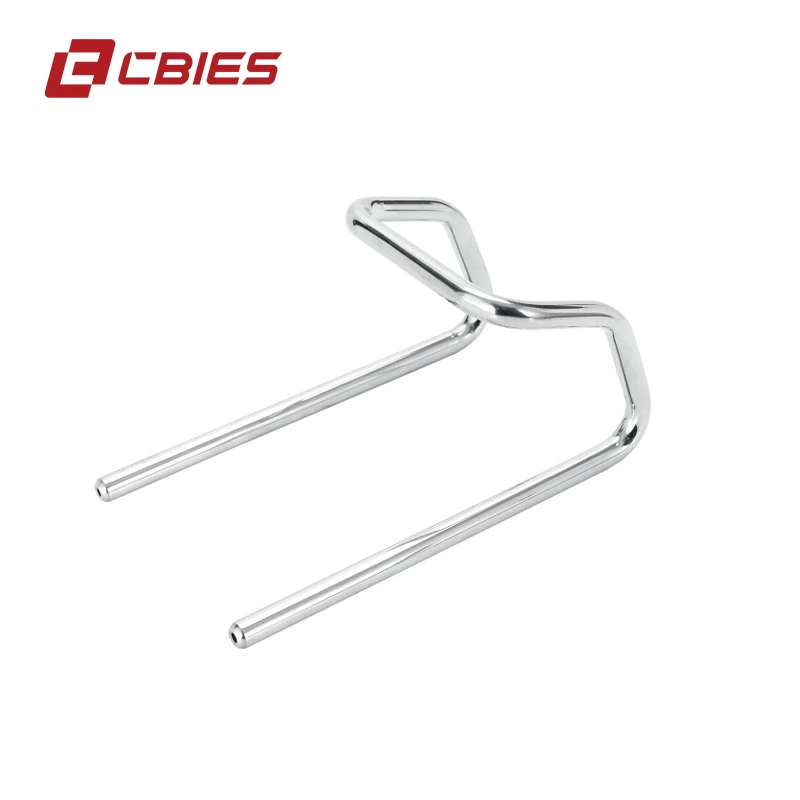
- Straight motorcycle handlebars offer a distinct riding posture and aesthetic that is iconic on cruiser and chopper-style motorcycles. From an engineering perspective, their seemingly simple design presents unique challenges.
- The straight, wide configuration can act as a longer lever, transmitting more vibration from the front end and potentially amplifying stress at the mounting clamps. Therefore, the material strength and construction of straight motorcycle handlebars are critical.
- At CBIES, we engineer our straight motorcycle handlebars from high-tensile strength materials to resist bending moments and torsional forces. The wall thickness is meticulously controlled to provide ample strength without excessive weight.
- Furthermore, the mounting area is often reinforced to handle the concentrated stresses. Beyond strength, the appeal lies in the relaxed, arms-forward riding position they create. We offer a variety of widths and pullback angles, allowing riders to achieve their desired look and comfort level, all backed by the unwavering material integrity that defines the CBIES brand.
Moto Handlebars FAQs
What Materials Are Commonly Used In High-Strength Moto Handlebars?
High-strength moto handlebars typically use chromoly steel or aluminum alloys. Chromoly steel offers an excellent strength-to-weight ratio and superior fatigue resistance, ideal for demanding use. Aluminum alloys provide lightness and good stiffness, often used in performance applications. CBIES selects grades based on the specific balance of strength, weight, and vibration damping required.
How Do Straight Motorcycle Handlebars Affect Riding Ergonomics?
Straight motorcycle handlebars create a more upright and relaxed riding position. They place the rider's hands in a wide, natural stance, which can reduce lower back strain compared to sportier, lower bars. This ergonomic is favored for casual cruising and offers good leverage for low-speed maneuverability, enhancing comfort on long rides.
Why Is Vibration Damping A Critical Feature For Moto Handlebars?
Excessive vibration transmits fatigue directly to the rider's hands and arms, reducing control and comfort over time. Effective damping in moto handlebars is crucial for long-distance riding. It helps maintain precise input and prevents numbness, directly contributing to sustained riding safety and enjoyment.
What Should I Consider When Choosing Motorcycle Handlebar Accessories?
When selecting motorcycle handlebar accessories, prioritize compatibility with your handlebar diameter. Ensure materials offer sufficient strength and corrosion resistance. Consider the accessory's function—for example, bar-end weights must be correctly weighted for effective damping. Always choose quality components that maintain secure attachment under vibration.
How Does CBIES Ensure The Quality And Durability Of Its Products?
CBIES ensures quality through strict material certification, precision CNC manufacturing, and mandatory strength testing. Every moto handlebar undergoes rigorous checks for dimensional accuracy, structural integrity, and surface finish. This comprehensive quality control guarantees that our products meet high standards for performance and durability.