Seamless Steel Pipe Production Process Technology
Dec . 12, 2025 20:35
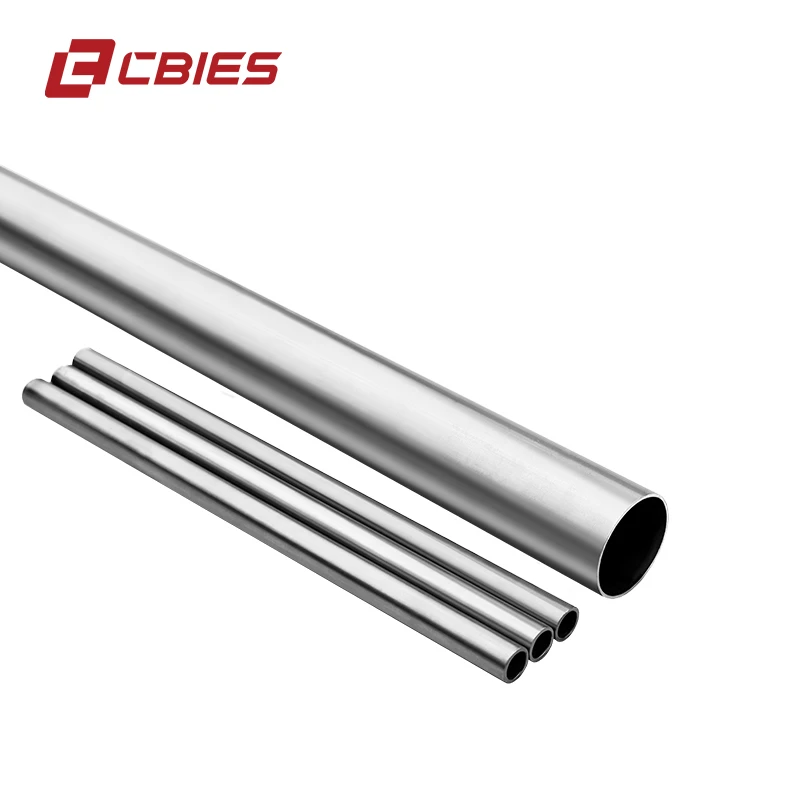
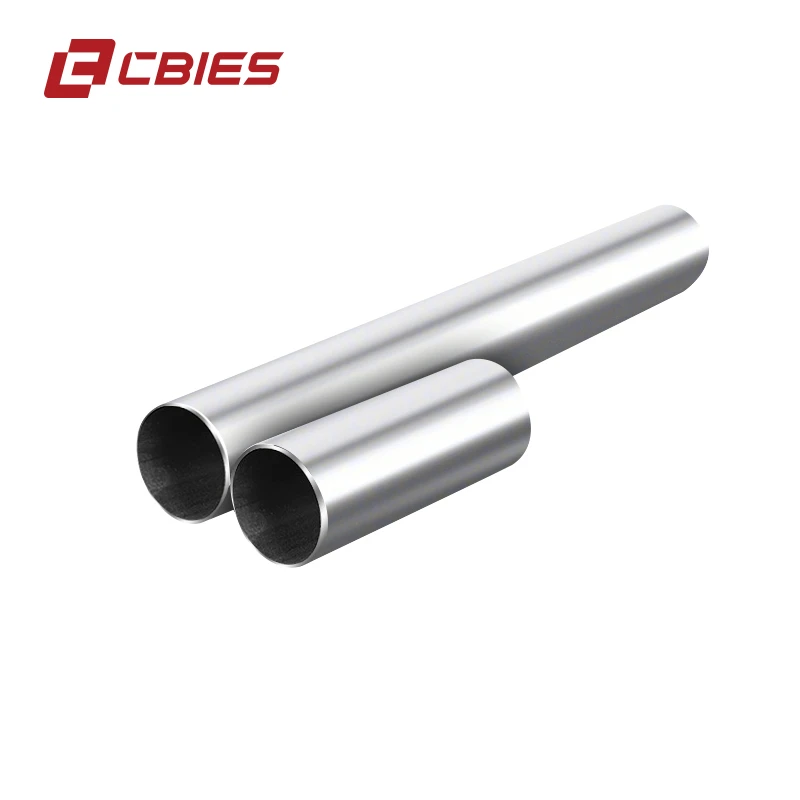
In the world of industrial manufacturing, few components are as critical and ubiquitous as the seamless steel pipe. Renowned for their superior strength, reliability, and uniformity, these pipes are the backbone of industries where failure is not an option, including oil and gas exploration, power generation, and high-performance automotive systems. The term "seamless" is not merely a descriptor; it signifies a product born from a sophisticated manufacturing process that creates a hollow tube without any welded seams. This inherent structural continuity grants seamless steel pipes exceptional ability to withstand high pressures, extreme temperatures, and corrosive environments. At CBIES, we master the complex art and science of producing high-quality seamless steel tubes, leveraging advanced process technology to deliver products that meet the most demanding application requirements across the globe. Our commitment is to provide tubing solutions where integrity, safety, and performance are paramount.
The Fundamental Advantages Of Using Seamless Steel Pipe In High-Pressure Applications
- The absence of a welded seam is the single most significant factor that makes seamless steel pipe the preferred choice for high-pressure and high-stress applications. A weld seam can often be a potential point of failure, a weakness where cracks or corrosion may initiate under cyclical loading or aggressive media.
- A seamless steel pipe, by its very nature, eliminates this vulnerability. The uniform, homogeneous structure around the entire circumference provides consistent mechanical properties and superior strength integrity. This allows seamless steel pipes to safely contain internal pressures that would challenge other types of tubing.
- Industries such as oil and gas, where pipelines transport hydrocarbons under immense pressure, and power generation, where boilers and steam lines operate at extreme temperatures and pressures, rely heavily on the inherent reliability of seamless steel pipe. At CBIES, we ensure our seamless steel pipes are manufactured to withstand these brutal conditions, providing a margin of safety that engineered systems demand.
A Detailed Look At The Manufacturing Journey Of Seamless Steel Tubes
- The creation of seamless steel tubes is a remarkable feat of metallurgical engineering, typically beginning with a solid cylindrical billet of steel. This billet is first heated to a high temperature in a rotary furnace until it becomes malleable.
- The core manufacturing step is piercing, where a piercing mill, often using a Mannesmann-type process, thrusts a mandrel through the center of the rotating billet to create a hollow shell, known as a hollow. This hollow is then elongated and rolled to achieve the desired diameter and wall thickness through various processes like plug rolling, mandrel milling, or stretch reducing.
- Subsequent stages involve reheating and sizing to refine the dimensions and improve the grain structure. Finally, the tubes are cut, straightened, and subjected to various finishing and heat treatment processes. At CBIES, we meticulously control each stage of this journey to produce seamless steel tubes with exceptional metallurgical integrity and dimensional consistency.
Navigating The Critical Importance Of Accurate Seamless Steel Pipe Dimensions
- In engineering and design, precision is paramount, and this is where the exact seamless steel pipe dimensions become critically important. Consistent and accurate dimensions—including outer diameter (OD), inner diameter (ID), and wall thickness (WT)—are not merely a matter of specification but a fundamental requirement for system integrity and functionality. Precise seamless steel pipe dimensions ensure proper fit-up during assembly, whether it's for threading, flanging, or welding into a larger system.
- They are essential for accurate flow calculations in fluid transport systems and for maintaining the structural calculations in load-bearing applications. Variations in wall thickness, for instance, can create weak spots leading to premature failure under pressure. CBIES places immense emphasis on dimensional control, utilizing advanced manufacturing and laser inspection technologies to guarantee that our seamless steel pipe dimensions consistently meet the tight tolerances required by our clients in sectors like aerospace and hydraulic systems.
Seamless Steel Pipe Dimensions FAQs
What Are The Key Factors Determining The Suitable Seamless Steel Pipe Dimensions For A Project?
Selecting the correct seamless steel pipe dimensions is a critical engineering decision based on several interdependent factors. The primary considerations include the internal pressure the system must contain, which dictates the required wall thickness and material grade. The flow rate and viscosity of the conveyed medium influence the optimal inner diameter to minimize pressure loss. External loads, such as structural weight or environmental stresses, also impact the choice of outer diameter and wall thickness to ensure mechanical stability.
How Does The Manufacturing Process Affect The Quality Of Seamless Steel Tubes?
The manufacturing process is the definitive factor in determining the quality and performance of seamless steel tubes. A precisely controlled piercing and rolling operation ensures a uniform grain structure and eliminates internal flaws, which is fundamental for strength and pressure integrity. Accurate temperature control during heat treatment is essential for developing the desired mechanical properties, such as toughness and ductility. Advanced cooling techniques after rolling further refine the metallurgical structure.
Why Is Wall Thickness Consistency So Critical In Seamless Steel Pipe?
Wall thickness consistency is paramount in seamless steel pipe because it directly correlates to the pipe's performance and safety, especially in pressure applications. An uneven wall creates a weak point at the thinnest section, which can become the initiation site for failure under stress or cyclic loading. This inconsistency can lead to premature rupture, leakage, or catastrophic system failure. Uniform wall thickness ensures even stress distribution around the pipe's circumference, maximizing its pressure-containing capability and longevity.
What Industries Most Heavily Rely On The Capabilities Of Seamless Steel Pipe?
Several critical industries rely heavily on the unique capabilities of seamless steel pipe due to their demanding operating conditions. The oil and gas industry is a major consumer, using them for upstream downhole tubing, casing, and surface flow lines that endure high pressures and corrosive environments. The power generation sector depends on them for high-temperature steam lines and boiler tubes in fossil fuel and nuclear plants. The automotive and aerospace industries use precision seamless steel pipes for hydraulic systems, fuel lines, and structural components where strength-to-weight ratio is vital.
How Does CBIES Ensure The Dimensional Accuracy Of Its Seamless Steel Tubes?
CBIES ensures the dimensional accuracy of our seamless steel tubes through a multi-layered approach combining advanced technology and rigorous procedure. We employ automated, laser-based gauging systems that perform continuous, real-time measurements of outer diameter and wall thickness during production, allowing for immediate process adjustments. After production, finished tubes undergo a final inspection using calibrated precision instruments to verify all seamless steel pipe dimensions against specified tolerances.